"We needed the warehouse floor resurfaced quickly to minimise downtime and Premier Epoxy Floors had it done in two days flat. The industrial coating they used has held up well under forklift traffic."
Karen B.
Caringbah
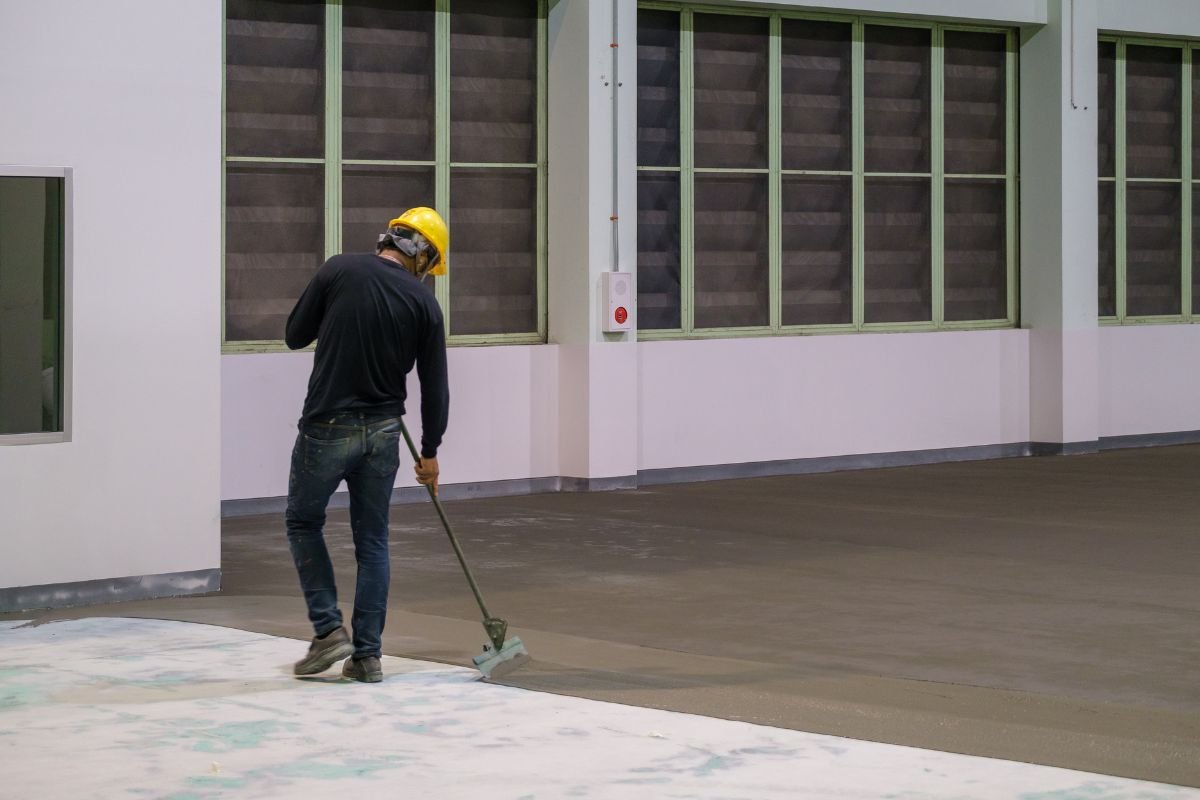
Professional industrial and commercial epoxy flooring services across the Sutherland Shire. Trusted by business owners across the shire.
Get a FREE Quote
Industrial floors take a beating. Forklifts, pallet jacks, chemical spills, constant foot traffic — if your concrete slab isn't properly protected, you're looking at surface erosion, cracking, and costly downtime. At Premier Epoxy Floors Sutherland Shire, we install multi-layer epoxy flooring systems specifically engineered for high-load industrial environments across Sutherland Shire. We use 100% solids epoxy resin applied at 3–5mm thickness for heavy-duty applications, combined with a diamond-ground surface preparation that opens the concrete pores and ensures a mechanical bond that won't lift or delaminate under pressure.
The Sutherland Shire's coastal humidity is a real problem for industrial concrete floors. Salt-laden air accelerates concrete carbonation, and moisture vapour transmission from slabs close to the waterline can cause standard epoxy coatings to blister and peel within 12–18 months. We assess moisture vapour emission rates (MVER) before every installation and, where needed, apply a moisture-tolerant epoxy primer to lock out vapour before the build coat goes down. This extra step makes the difference between a floor that lasts 15 years and one that fails in the first wet season. We also offer residential epoxy flooring if you're looking to protect your home garage or workshop with the same durable finish.
A typical industrial epoxy system from Premier Epoxy Floors Sutherland Shire starts with diamond grinding or shot blasting the existing slab to remove contamination and create a surface profile of CSP 3–5 (Concrete Surface Profile). We then apply a penetrating epoxy primer, a high-build mid-coat loaded with quartz or aluminium oxide aggregate for slip resistance, and a polyurethane or epoxy topcoat that resists UV exposure, chemical splash, and abrasion. Depending on your operation — whether you're running a food-grade facility in Caringbah, a logistics hub near Taren Point, or a mechanical workshop in Kirrawee — we'll tailor the system to the specific chemical and load requirements of your floor.
From slab assessment to final topcoat — what actually happens on your site
Before any product touches your floor, we assess the existing slab condition — checking for cracks, contamination from oil or hydraulic fluid, previous coatings, and moisture vapour emission levels. We use a calcium chloride or in-situ relative humidity test to get an accurate MVER reading, because applying epoxy over a damp slab is the single most common cause of premature coating failure in coastal NSW environments.
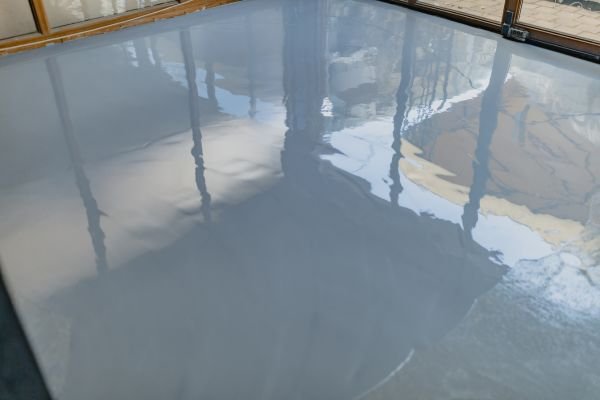
We use ride-on or walk-behind diamond grinding machines to remove any existing coatings, laitance, and surface contamination, opening the concrete to a CSP 3–5 profile. For heavily contaminated slabs — common in automotive workshops or manufacturing facilities — we may combine grinding with shot blasting to ensure the entire surface is clean and mechanically profiled. All dust and debris is extracted with industrial vacuum systems before the next phase begins.
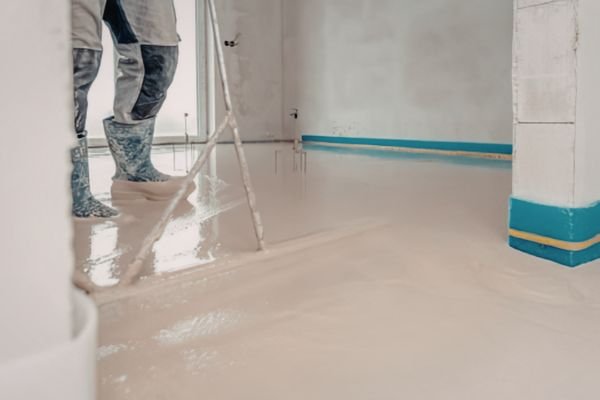
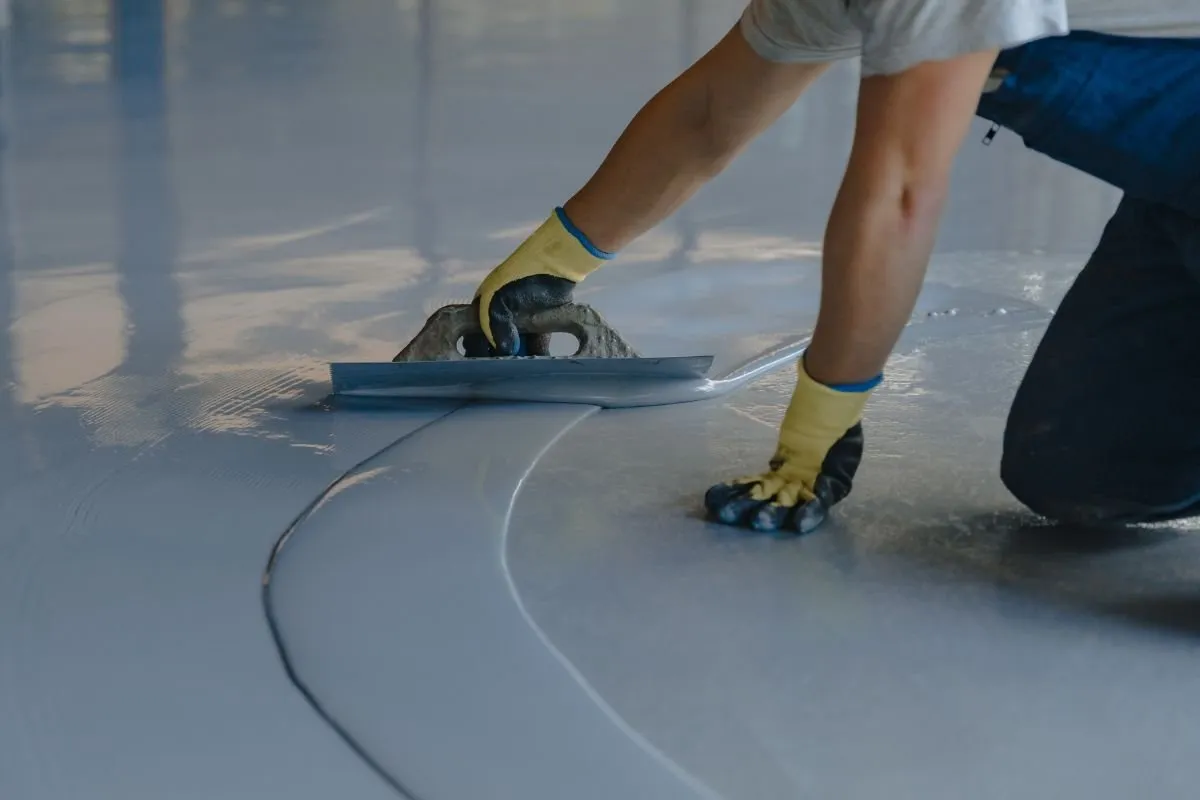
A penetrating epoxy primer is roller-applied into the open concrete pores and left to cure — typically 8–12 hours depending on ambient temperature and humidity. Once cured, the high-build epoxy mid-coat is mixed at a precise resin-to-hardener ratio and applied by squeegee and roller, with quartz or aluminium oxide aggregate broadcast into the wet coat for slip resistance. In Sutherland Shire's summer heat, we schedule applications for early morning to control pot life and ensure even film build.
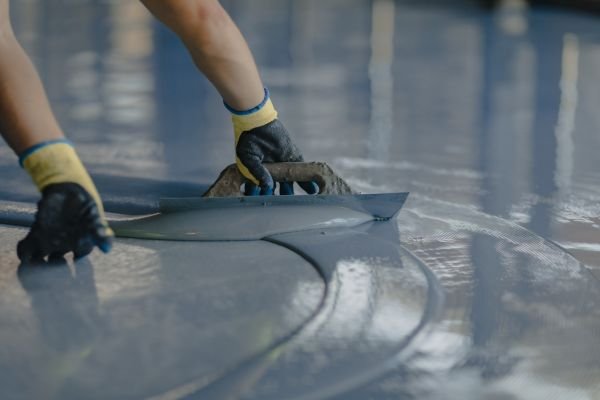
The final polyurethane or epoxy topcoat is applied once the build coat has fully cured, sealing the aggregate and delivering the finished colour, sheen level, and chemical resistance the system requires. If your facility needs bay markings, pedestrian walkways, forklift lanes, or hazard zones, we apply two-part epoxy line marking paint as part of this final stage. Most industrial floors are ready for light foot traffic within 24 hours and full forklift loading within 5–7 days.
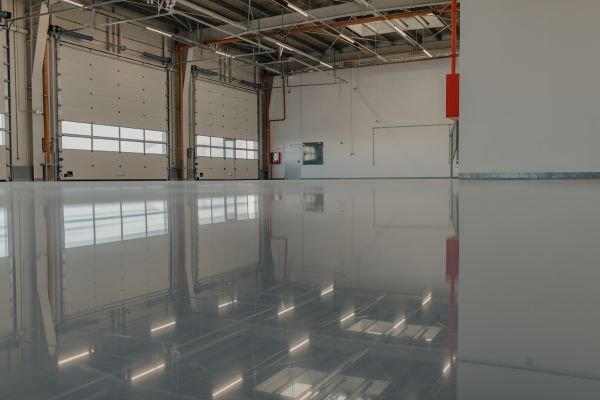
Longer floor life, safer conditions, and easier daily cleaning
A properly installed multi-layer epoxy system — with correct surface prep and a 3–5mm build coat — can withstand constant forklift and pallet jack traffic for 15 years or more before needing a maintenance topcoat. That's a fraction of the cost of patching and resealing bare concrete every few years, and it eliminates the dust and surface erosion that damages machinery and contaminates product.
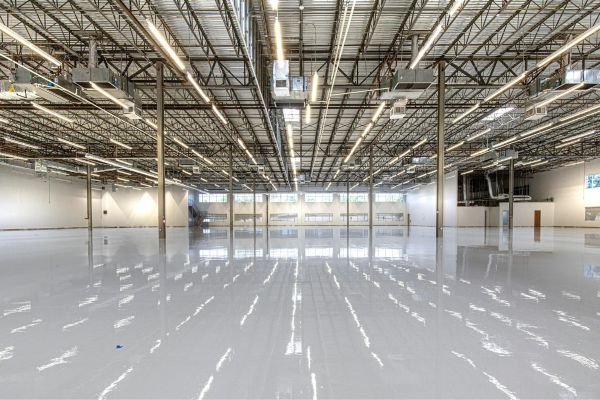
Aluminium oxide or quartz aggregate broadcast into the epoxy build coat delivers a slip-resistant surface that meets Australian workplace safety standards — even when wet from cleaning or spills. Combined with clearly delineated forklift lanes and pedestrian zones, your facility becomes significantly safer and easier to manage during SafeWork NSW inspections.
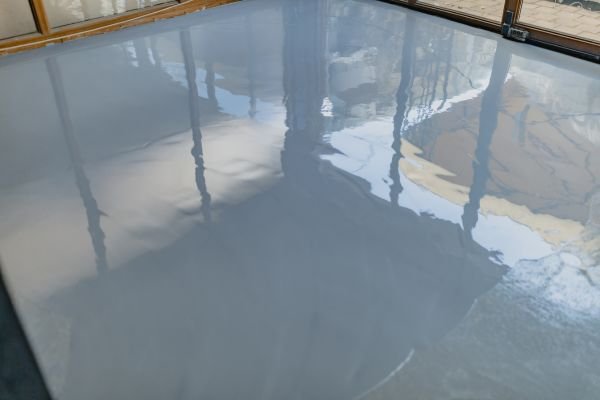
A smooth epoxy surface has no grout lines, expansion joint gaps, or porous concrete to trap oil, coolant, or chemical spills. Your team can clean the entire floor with a mop, squeegee, or ride-on scrubber in a fraction of the time it takes to clean bare or painted concrete. For food-grade or pharmaceutical facilities, the cove skirting option eliminates the wall-floor junction entirely, making hygiene compliance straightforward.
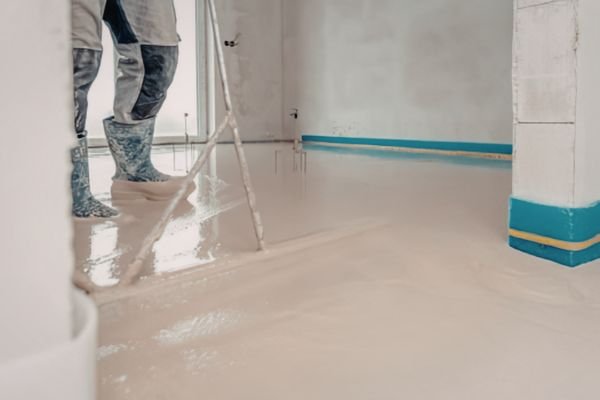
Working in Sutherland Shire means dealing with slabs that are affected by salt air, high humidity, and proximity to the waterline — conditions that cause standard epoxy systems to fail if not properly accounted for. We test every slab for moisture vapour before we specify a system, and we've built our installation process around the specific challenges of coastal NSW concrete.
A lot of operators apply epoxy paint over unprepared concrete and call it industrial flooring. We install complete multi-layer systems with mechanical surface preparation, a penetrating primer, a high-build mid-coat, and a chemically resistant topcoat — the same approach used in food manufacturing, pharmaceutical, and heavy logistics facilities. The preparation phase alone typically takes as long as the coating application.
A food-grade facility in Caringbah needs a different system to a mechanical workshop in Kirrawee or a logistics hub near Taren Point. We assess your floor loads, chemical exposure, drainage requirements, and hygiene standards before recommending a system — so you get a floor that actually suits your operation, not a one-size-fits-all coating.
We work in sections where facilities can't shut down completely, and we schedule installations around your shift patterns to reduce downtime. Our team brings all equipment on-site — diamond grinders, shot blasters, industrial vacuums, and mixing equipment — so there are no delays waiting on subcontractors or hire gear. Most floors are back in full operation within a week of us starting.
Common questions answered
Most industrial floor installations take 2–4 days depending on the floor area, the number of coats required, and ambient temperature and humidity conditions. In Sutherland Shire's summer heat, we schedule early morning starts to manage pot life and curing times. Light foot traffic is typically possible within 24 hours of the final topcoat, and full forklift and heavy vehicle loading is safe after 5–7 days.
The main cost factors are the floor area, the condition of the existing slab, the system specification (number of coats and coating thickness), and any additional requirements like line marking, cove skirting, or chemical-resistant topcoats. Heavily contaminated slabs — common in automotive or manufacturing facilities — require more preparation time, which adds to the overall cost. We provide a detailed written quote after assessing your slab on-site.
Moisture vapour transmission is the most common cause of epoxy failure in coastal areas like Sutherland Shire, and it's exactly why we test every slab before we quote. Where MVER readings are elevated, we apply a moisture-tolerant epoxy primer specifically formulated to handle vapour transmission from below, which prevents the blistering and delamination you've likely seen with previous coatings.
Yes, but the specific topcoat needs to match the chemicals your floor will encounter. Standard epoxy topcoats handle mild acids, oils, and fuels well. For stronger acids, caustics, or solvents — common in manufacturing or food processing — we specify a novolac epoxy or chemical-resistant polyurethane topcoat. Tell us what your floor is exposed to and we'll specify the right system.
Daily sweeping and weekly wet mopping with a pH-neutral cleaner is all most industrial epoxy floors need. Avoid dragging sharp metal across the surface, and address any point-load damage from dropped equipment promptly — small chips are easy to patch before they grow. In most industrial environments, a maintenance topcoat every 7–10 years will restore the surface and extend the floor's life significantly.
Real feedback from Sutherland Shire, NSW property owners
"We needed the warehouse floor resurfaced quickly to minimise downtime and Premier Epoxy Floors had it done in two days flat. The industrial coating they used has held up well under forklift traffic."
"We had a tight deadline before a fit-out and they worked around our schedule without any fuss. The floor coating in our commercial space has been easy to clean and looks professional."
We provide industrial epoxy flooring throughout Sutherland Shire, NSW and surrounding suburbs
Don't see your area? Contact us to check if we service your location!
View All AreasExplore our other professional services